Tree trimming in Chicoutimi
Tree trimming must be carried out by experienced arborists who understand the needs of trees.Are you looking for tree trimming services in Chicoutimi, Jonquière, or in one of the cities in the Saguenay–Lac-Saint-Jean region? The professional and experienced arborists at Arboriculture du Fjord provide meticulous tree trimming that respects the needs of your trees.
What is tree trimming?
Tree trimming is a horticultural practice that involves the careful removal of branches that are dead, diseased, harmful, or dangerous. Several factors must be considered during tree trimming: the tree species, its age, its vigor, and its structural characteristics. It is also important to choose the right time to perform tree trimming and to respect surrounding structures.
Considered a preventive measure, tree trimming helps extend the lifespan of a tree. When done properly, it prevents and limits the progression of decay and disease while allowing for quick healing.
This process also reduces the risk of breakage and ensures the safety of people and nearby structures.
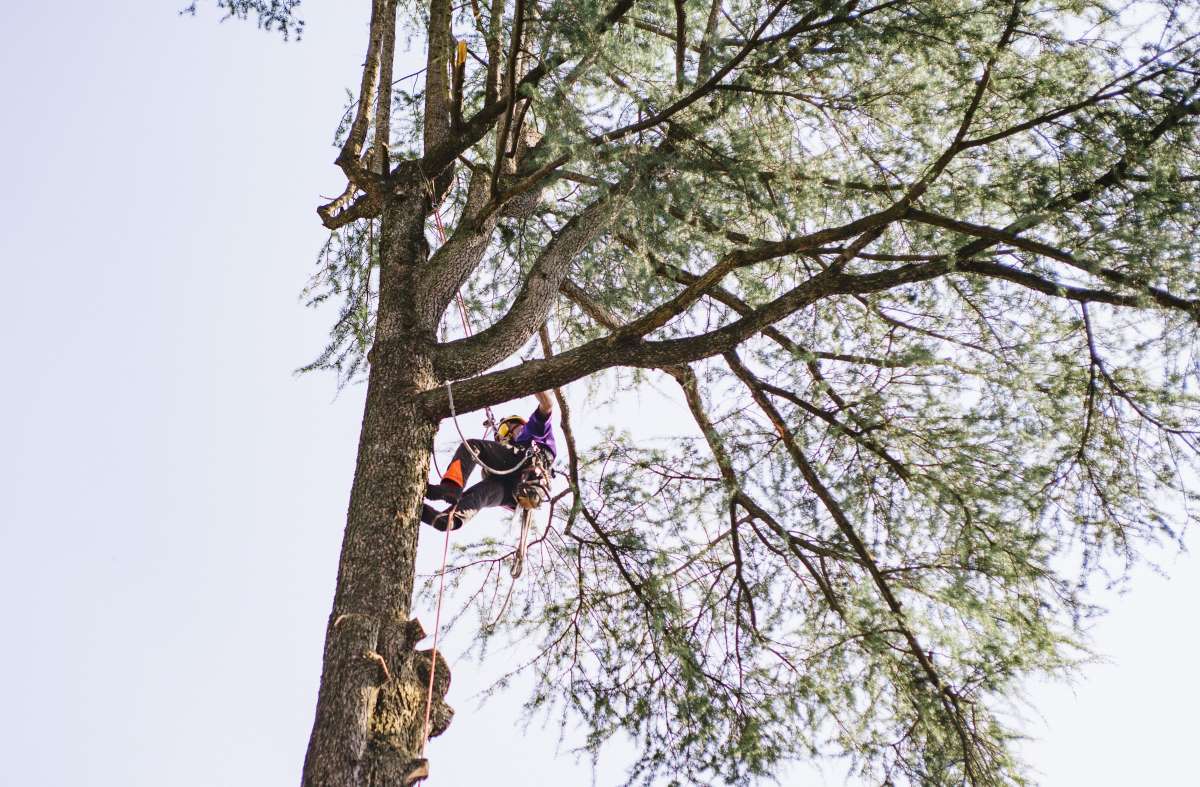
Our tree trimming services
Our professional team offers the following tree trimming services:
Training pruning
A preventive intervention performed on a young tree to promote structured and safe growth.
Fruit tree pruning
A type of tree trimming used to improve fruit quality (size, color, taste) and maintain the balance between vegetative growth and fruit production.
Safety (sanitary) tree trimming
This type of tree trimming removes dead, diseased, damaged, or dangerous branches as quickly as possible to ensure safety and preserve tree health. Aesthetic appearance is also a reason to have a tree trimmed.
View clearing
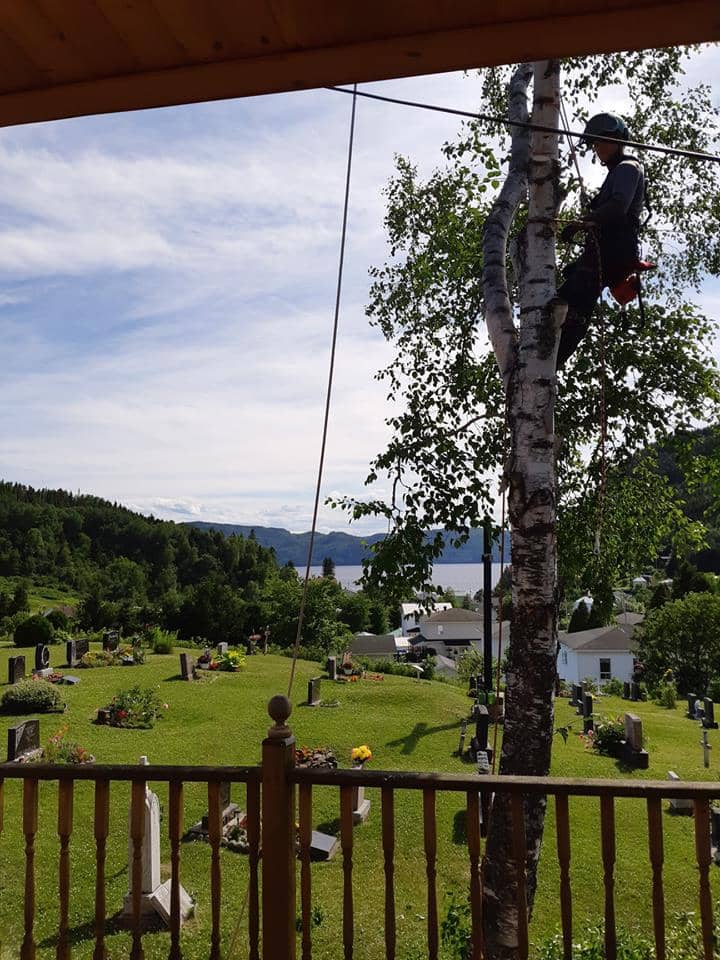
A tree trimming technique that creates openings in the branches to fully enjoy a view (valley, mountain, river, lake, fjord, etc.).
Thinning
A type of pruning that improves air circulation inside the tree. This process prevents the decline of the inner canopy caused by lack of air and sunlight.
Compensatory pruning
A type of pruning used to restore the tree’s symmetry when an imbalance occurs. This intervention helps prevent uprooting caused by excessive weight on one side of the tree.
When should trees be trimmed?
For deciduous trees, conifers, and fruit trees, tree trimming is best performed in early spring, before the start of annual growth and while the buds are still in a dormant stage. Spring is a transition period for plants, as they enter an active phase known as sap flow, followed by bud break and leaf formation. Trimming during this period is not recommended, as it can cause excessive sap loss, attract insects and diseases, and disrupt the tree’s natural cycle.
By trimming before this period, energy and nutrients from the roots are better redistributed when the tree resumes its biological activity. This helps revitalize the entire tree. In addition, during dormancy (early spring), wounds heal more quickly and have less impact on growth. Since the tree has not yet developed leaves, it is also easier to identify which branches should be removed.
The trimming of dead, diseased, interfering, or dangerous branches can be done during the tree’s active phase (once leaves have fully developed). Healing will be faster and will reduce issues related to insects and diseases.
In the fall, it is essential to wait until the hardening process is complete before performing tree trimming. This is another transition period during which the tree prepares for winter by slowing its metabolism and strengthening its branches (lignification). It is also important to avoid trimming too late in the fall, as wounds may not have enough time to heal before freezing temperatures arrive.
At the time of planting, immediately after transplanting, it is important to avoid trimming the upper branches to compensate for root pruning. Instead, wait 2 to 3 years to ensure the root system is well established. After that, training pruning can be done to develop a strong structure and shape the tree. No more than one-third of the above-ground branches should be removed.
For conifers, pine trees should be trimmed around mid-June, before new needles emerge. At that time, they can be reduced by up to half their length. By late summer, the cut tips will produce new terminal buds that will become new growth the following year.
Spruce and fir trees should be trimmed between mid-May and early June, before the formation of new buds that will become next year’s growth. For cedar and juniper trees, it is recommended to trim new growth in early spring or up to mid-June. Trimming the most vigorous branches once or twice during the summer is recommended to increase density.
Contact us for tree trimming services
For more information about our tree trimming services in Chicoutimi, Jonquière, or in any of the cities in the Saguenay–Lac-Saint-Jean region, contact Arboriculture du Fjord at (581) 234-4190. Don’t wait until your tree is too diseased to be saved or becomes a danger to you and others. Plan for its growth and take care of its health!
© 2026 - ARBORICULTURE DU FJORD Inc. - All rights reserved.